Sunday, 6 September 2015

Le Trou (The 'Sigma' Hole)

Figure 1


I would like to talk about a number of great topics I have learnt from the Como Fluorine Conference in August. 2 of the keynote lectures, by Profs. François Diederich and Makato Fujita respectively, shed light on halogen bonding and its potential applications in molecular recognition. This time I will talk about Prof. Diederich’s one, I will leave Prof. Fujita for next time, as both talks are extremely impressive.

Prof. Diederich and his group has done a lot of impressive research in the field of molecular recognition, and some of the key intermolecular interactions include orthogonal dipolar interaction, halogen bonding, and pi-stacking.

An orthogonal dipolar interaction concerns an interaction of the type C-X ----- C=O. In one of the cases, it is a C-F ----- C=O interaction. For example, when the molecule nilotinib is interacting with the DFG loop of a protein, the fluorine atom on the CF3 group can interact with the C=O bond on a particular amide group in the protein, in an intermolecular and orthogonal manner (Figure 2).


Figure 2


The other fascinating aspect of their research is the halogen bonding interaction (Figure 3). Halogen bonding (XB) can be defined as a non-covalent, intermolecular interaction of a Lewis basic group and the electrophilic part of a halogen group.  The term ‘σ hole’ is often termed and it is described as the area where the lone pair of the Lewis base is aligned with the σ* orbital of the carbon-halogen bond. Indeed, the size of the σ hole increases with a lower hybridization (sp) of halogen-bond donor. In 2014, Diederich et. al. has synthesized a number of (iodoethynyl)benzene derivatives, and study their halogen bonding properties with the Lewis basic quinuclidine. From the linear Hammett analysis, they have concluded that the para-substituent on the aromatic ring is in electronic communication with the iodethynyl group, and this can affect the halogen bonding interaction of the given compound (Figure 4).

Figure 3. The blue dotted-lines represent halogen bonding.


Figure 4


Thereafter, they have synthesized a 2-component, donor-acceptor type supramolecular architecture. The ‘donor’ side consists of 4 lutidine rings, where the nitrogen atom is Lewis basic (Figure 5). On the other hand, the acceptor side consists of 4 tetrafluoro-iodophenyl groups, and the iodine atom, closest to the donor side, is the ‘halogen donor’. Thus a N --- I halogen bonding appears, and the group has used 19F NMR binding titration studies and 2D NMR to show this has taken place.  A 1H, 19F HOESY NMR experiment has been used to map out the intermolecular H-F coupling (Figure 5). The cross signal in the 2D spectrum showed the through space interaction, and only the fluorine atoms ortho- to the iodine atom could couple through space to the hydrogens on the lutidine core. Along with the other data, the researchers have been able to verify the halogen bonding in action.

Figure 5.

When looking at single halogen bonding in solution, studies show that it is largely enthalpy driven, and also have a large unfavourable entropy at the same time. It also seems evident from the studies that, for a given, general structure of an inhibitor, a different substitution on the aromatic ring can drastically alter the binding constant K. The key explanation is because in some cases, an enthalpically frustrated water can be positioned in between the interaction sites, and in other case it is displaced. Thus, to improve inhibitory effects, a systematic understanding (which will involve a lot of modeling) has to be achieved, and it is great to see that many of these insights have already emerged from the research literature.

by Ed Law
6/9/2015

Reference for this blog article from:

Angew. Chem. Int. Ed. 2015, 54, 1.
Angew. Chem. Int. Ed. 2015, 54, 3290. A review.
Org. Lett. 2014, 16, 4722.
Phys.Chem. Chem. Phys., 2013, 15, 11178. A review.
ChemMedChem 2011, 6, 2048.
Science 2007, 317, 1881.
ChemMedChem 2006, 1, 611.
Angew. Chem. Int. Ed. 2004, 43, 5056.
ChemBioChem 2004, 5, 666.
Angew. Chem. 2003, 115, 2611.


Tuesday, 1 September 2015

SteadiCHEM (Fluorous Zinc Reagent)

At Expo Milano 2015, inside the 'Russia World'. Taken by Ed Law.


In the Como fluorine conference, I had a stimulating discussion with an insightful co-worker, who worked in the synthesis of ‘fluorous buckybowls’. He has pointed me to a great paper by Prof. Mikami et. al. in Chemistry – an European Journal earlier this year. I have read it and it is impressive – I would love to talk about that here!

Copper Catalyzed coupling reaction of perfluoroalkylzinc reagent. Adapted from [1].

Prof. Mikami’s group has reported the synthesis of a perfluoroalkylzinc reagent, of the structure (RF)2Zn(DMPU)2, and its application in a copper-catalyzed coupling reaction, that results in perfluoroalkyl aromatic / heteroaromatic compounds. [1] The zinc reagent itself, unlike many main group organometallics involving Li and Mg, is a stable white powder. Yet, as the title of the article has pointed out, it is a reactive reagent. Like Charlie Bronson, he may have the leisure to play a harmonica, but he can shoot, too.

A trifluoromethylation reaction. Adapted from [2].


Some time ago, they have reported a trifluoromethylation reaction of aromatic halide using a copper catalyst. [2] The perfluoroalkylzinc reagent is generated in situ from CF3I and zinc dust. In order to improve the versatility of the methodology, they have then developed the new reagent, (RF)2Zn(DMPU)2.

Generation of the stable perfluoroalkylzinc reagent. Adapted from [1].

The perfluoroalkylzinc reagent is generated by a reaction between perfluoroalkyl iodide (RF-I), diethylzinc, and DMPU at -60oC, using hexane as a solvent. After warming to -20oC and stirring at this temperature for 48 hours, the reaction mixture is worked up and finally they afford an air-stable white powder (except when RF = CF3, which is stable under argon).

The coupling reaction can be done in one-pot. After all the reactants (perfluoroalkylzinc reagent, copper salt, and aromatic halide / vinylic halide...) are loaded into the flask at room temperature under argon, the reaction takes place at elevated temperatures, affording the coupled product after workup. They have been able to couple 5 different perfluoroalkyl groups to 2 types of coupling partners – a substituted aromatic halide or a vinylic halide.


A selection of achieved chemical products. Adapted from [1].


The most important step in the reaction pathway is the transmetallation of the perfluoroalkyl group, from zinc to copper center. The researchers have carried out nice 19F NMR experiments to elucidate the possible intermediates, and these results have proved to show important insights regarding the reactivity of the different types of perfluoroalkylzinc reagents. Before I go into these, it would be more logical to look at the observations first.

Though belonging to the fluorine universe, the results in a trifluoromethyl (CF3) group is rather different from the longer perfluoroalkyl chains (C2F5, C3F7 , C6F13 ...). In most cases, a 10 mol% loading of the copper catalyst, CuI, is enough to effect the coupling reaction at elevated temperature, and in some cases even a lower catalyst loading may also work. For the longer perfluoroalkyl chains, the electronic status of the aromatic compound (whether it contains an electron withdrawing or electron donating substituent) is not important, although electron donating groups lead to a longer reaction time. This is NOT the case for the CF3 group. While aromatic rings containing electron-withdrawing groups work well, no reaction can be observed for those substrates with electron-donating groups (methoxy in this case), even when a stoichiometric amount of CuI is used. When employing 1 eq. of another copper salt, CuTC,   successful reaction with a good yield can be afforded. This observation indeed confirms what the researchers have discovered in the 19F NMR experiments. When they mix (CF3)2Zn(DMPU)2 with CuI, they disover 2 singals in the 19F NMR specturm, which correspond to 2 different anionic copper species. When they mix the same zinc reagent with CuTC,  another 2 different signals appear, and one of them is likely to corresponf to CuCF3. Indeed, CuCF3 is a likely intermediate in many of the copper-catalyzed coupling reaction involving trifluoromethyl groups, and these observations may imply that distinct copper intermediates are involved in all these coupling reactions.


It can also be seen that, the longer reaction time regarding the long perfluoroalkyl chains is likely attributed to a slower zinc-to-copper transmetallation step. And, the temperature range (50-120 oC) also shows the thermal stability of the perfluoroalkylcopper intermediates in these reactions.

They have also proposed a possible mechanism.

Proposed reaction mechanism. Taken from [1].


This is an impressive work. In the Como Conference, I have the great opportunity to meet Professor Kenji Uneyama, who has done a lot of research on organometallics involving fluorinated compounds. In his wonderful lecture, he has shown that while a lot of organometallics can be made (Li, Mg, Cu, Zn), many of them can be rather unstable and can only be used at very low temperature (including cuprates of the types R2CuLi or R2Cu(CN)Li2). And, it can be hard to predict (or have strong confidence) which structure will generate a stable one, you have to experiment on it! I have the impression that those organometallics involving Cu and Zn tend to be more stable at elevated temperature, and therefore should find wider applications in coupling reactions. Given the emergence of many of these great perfluoroalkyl reagents (see also my recent article ‘The Magnficent ATEbersons’, RFZn(Me)Cl-Li+), this certainly is a burgeoning field.


By Ed Law
1/9/2015

Reference:

1. Stable but Reactive Perfluoroalkylzinc Reagents: Application in Ligand-Free Copper-Catalyzed Perfluoroalkylation of Aryl Iodides
Kohsuke Aikawa, Yuzo Nakamura, Yuki Yokota, Wataru Toya, and Koichi Mikami
Chem. Eur. J. 2015, 21, 96 – 100
DOI: 10.1002/chem.201405677

2. Y. Nakamura, M. Fujiu, T. Murase, Y. Itoh, H. Serizawa, K. Aikawa, K. Mikami, Beilstein J. Org. Chem. 2013, 9, 2404.


Added on 2/9/2015:

I think I have missed a few interesting aspects in yesterday's article. First, a bit more on the Zinc / copper perfluoroalkyls. Zinc and copper fluorous organometallics are more thermally stable than their Li / Mg counterparts, due to a stabilization from a more 'covalent' character in the metal-carbon bond, which is originated from a softer nature of the metal. Thus, these compounds tend to be able to survive a higher reaction temperature.

Second, an observation in the reaction is that, when electron-donating group substituted aromatic halides are used as reactants, 15% of pentafluoroethylated by-product can be observed, when 1 eq. of CuTC is used at 50oC. How does this side product arise? Well, there is evidence that when trifluoromethylcopper (I), CF3Cu is generated,  CF3Cu is in an equilibrium with [CF2Cu]F-. This can be built up to a longer perfluoroalkyl copper chain, through a carbene insertion mechanism. This 'oligomerization' can be stopped by adding HMPA. The carbene insertion equilibrium is the likely reason for the formation of perfluoroethyl side-products in this coupling reaction, and it has also been observed in other copper systems. The pentafluoroethyl side-product can be rather difficult to remove from the crude mixture. As stated, this side-reaction can be counteracted by adding HMPA (the researchers have used DMPU here instead) or lower the reaction temperature. Yet,  I suppose 50oC is already the lowest temperature the researchers can get to, and have ca. 75% isolated yield for the product is already impressive.

by Ed Law
2/9/2015

Sunday, 28 June 2015

Hey Geisha, Hold on !

Figure 1. Taken from Ref. [1].

The Angew. Chem. paper I am sharing with you this time is impressive, it is on the chemistry-biology interface. [1] It is about bio-conjugation , which is applying a chemical reaction to a biological macromolecule. Let’s deal with both fields in detail, one by one.

Bioconjugation is useful, because we can start to attach unnatural or unconventional chemical substrates onto biological molecules, such as proteins, complex carbohydrate architectures or nucleic acid-based compounds. While these methodologies have found great uses in synthetic biology, the design of the reactions is often challenging. Unlike conventional organic substrates, the reactants we are dealing with here are biological molecules, which are sensitive to high temperature, extreme pH, and possess loads of stereogenic centers. Conventional wisdom shows us that we can lower the activation energy barrier of a reaction (i.e. increasing the reaction rate) by increasing the reaction temperature. However, this does not help in the case of biological molecules, as the high temperature, or a sudden perturbation in pH, can lead to negative results, such as the denaturation of proteins or possible racemizations. So, the best methods for bioconjugation should work optimally at physiological temperature (37oC) , narrow pH range, and also work well in an aqueous media.

How can we incorporate unnatural chemical functionalities into a supposedly natural biomolecule? Molecular biology methods, of course! In this case, a protein was expressed with an unnatural amino acid (UAA), with a carbon-carbon triple bond (alkyne) on it. The alkyne can act as a ‘handle’ for other reactions, and in the past, click chemistry and Sonogashira coupling has already been successfully employed.

Figure 2. The Glaser-Hay coupling reaction.

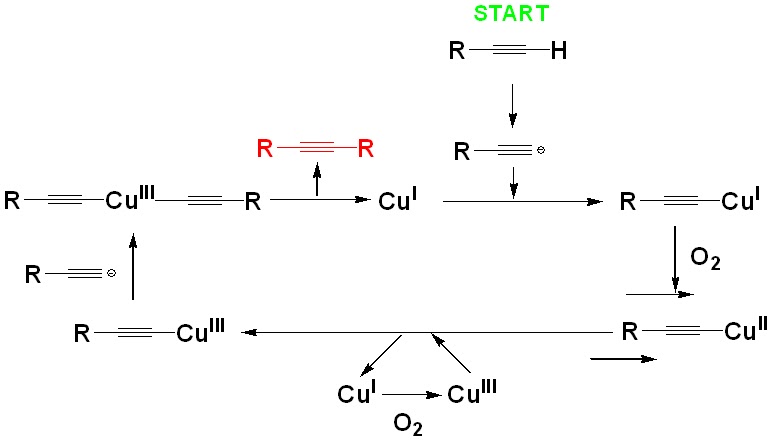
Figure 3. The catalytic cycle of Glaser-Hay coupling reaction.

The reaction in focus is known as the Glaser-Hay coupling reaction (Figure 2). It is a copper-catalyzed coupling reaction between 2 carbon-carbon triple bonds. Previous studies have concluded that the reaction probably involved a dimeric copper acetylide intermediate, and the mechanism involved an oxidation of the copper species, from +1  to +2 and then +3, and finally back to +1, continuing the catalytic cycle (Figure 3). Traditionally, this was a homo-coupling reaction, which meant you had 2 identical coupling partners to get the dimeric, symmetrical product. This unfortunately hinders its potential applications. Because what we want is a CROSS-coupling (hetero-coupling) reaction, in which you have 2 different coupling partners, A and B, to form an A-B type product (rather than an A-A or B-B type product). How about adding 2 different substrates to the Glaser-Hay system? Nope, it does not work well, as we almost alyways have a statistical amount of homo-coupling products, and that hinders purifications too. There is good news, though, as recently novel systems have been developed to lead predominately to hetero-coupled partners. For example, Lei and Agrofoglio independently developed co-catalyzed system involving a Ni (II) / Cu (I) system, and these methods work well for a variety of alkynic substrates. On the other hand, if one of the coupling partners is attached to a solid support, heterocouplings also predominate. Glaser-Hay reactions work well in organic solvents, yet it is rather unprecedented to work in an aqueous media. This article shows us that possibility.

Figure 4. The substrate for the coupling reaction. Taken from Ref. [1].

The researchers started with some model reactions on small molecules before embarking on biomolecules (Figure 4, a). With phenylacetylene and propargyl alcohol respectively, they could achieve respectively homo-coupled products in an aqueous solution with CuI / TMEDA as the catalytic system. They had to premix these 2 reagents to establish the copper complex before it could be bound to an alkyne substrate and start catalysis (Figure 5).

 Figure 5. The first stage of the catalytic cycle. Taken from Ref. [1].

To achieve unconventional biological products for their methodolgy, the researchers installed an unconventional amino acid, ‘propargyl phenylalanine’, at position 151 of the green fluorescent protein substrates they used, which was known as pPrF-GFP (Figure 4, b). They coupled this substrate with ‘AlexaFluor 488 modified alkyne’, and succeeded in making the hetero-coupled product (Figure 6, 7). They have also explored the substrate scope of their method. For solid-supported reactions, they have achieved similar yields with a propargyl or a hexyl-derived alkyne, and also in other types of biologically-related substrates (Figure 8). The results were easily visualized, as a successful coupling reaction would lead to an observable fluorescent signal, or by SDS-PAGE analysis (Figure 7).  

Figure 6. Glaser-Hay bioconjugation. Taken from Ref. [1].


Figure 7. The results of the Glaser-Hay bioconjugations as illustrated by a normal SDS-PAGE gel and a fluorescent version. In diagram A, we can see that the unconventional amino acid, pPrF, has been successfully incorporated into the GFP (Lane 2), because there is no GFP spot in Lane 3, when pPrF is absent. In diagram B, we can observe that the coupling reaction has been successful carried out because in Lane 2 and 4, which corresponds to 2 different temperatures, and with both copper catalyst and pPrF-GFP present, this substrate is coupled to the fluorophore ‘Alexa’. Therefore, fluorescene signals are evident in those lanes, signifying successful C-C bond formation. This is not the case for the other control experiments (Lane 3, 5, 6, 7), where one or both of the aforementioned components are absent. When the researches use a wild-type GFP – that means one that has no pPrF incorporated, of course no coupling occurs.


Figure 8. Other substrates. Taken from Ref. [1].

The researchers have discovered a possible unproductive side reaction - a Cu (I) -catalyzed oxidative degradation. Another interesting observation was that the reaction rates were comparable at a low (4 oC) and high temperature (37 oC). They attributed this to a  protein degradation at the higher temperature, inhibiting reaction progress.


Some personal opinions

This paper is absolutely smashing, and I hope there will be further developments on the project. In the paper, the researchers have employed 2 different alkynic substrates, a propargyl and a hexyl one. I wonder if there will be any different, in terms of reaction rates, as the chemical environment next to the 2 respective triple bonds are surely distinctive – in the propargyl case, the triple bond and the oxygen is only separated by a CH2 group, while in the hexyl alcohol case, the oxygen and the triple bond were separated by a much longer spacer. A further question would be, can we use a more hindered propargyl-type secondary ether, as we may even generate a possible stereogenic center close to the biological site (Figure 9)? The ‘double conjugated alkyne’ should serve as a nice handle for further reactions to occur – how about a thiol-yne coupling or a nucleophilic addition of ROH onto the terminal alkyne?

Figure 9. A potential asymmetric Glaser-Hay coupling reaction?

The second question - is it possible to use a Cu (II) salt, such as CuSO4 , instead to effect the coupling reaction? Obviously, this would not have the same mechanistic similarity like the Glaser-Hay type reaction, yet homocoupling involving Cu (II) salts do exist, e.g. Cu(OAc)2 for Eglinton reaction. If this is OK, then it will increase the versatility of the reaction as the Cu (II) salts are readily accessible.

It would be really exciting if this research topic can be developed much further!

by Ed Law
28/6/2015


Reference:

1. Development and Optimization of Glaser–Hay Bioconjugations
J. S. Lampkowski, J. K. Villa, T. S. Young, and D. D. Young
Angew. Chem. Int. Ed., 2015, asap.
DOI: 10.1002/anie.201502676


Saturday, 20 June 2015

Growing out of Copper's Pants

Figure 1. Porphyry copper deposits. 
(Taken from http://pubs.usgs.gov/fs/fs053-03/fs053-03.html)


You see, I always have a strong interest in Geology and Geomorphology, and indeed I have been a tutor of the undergraduate Environmental Chemistry course for some time! I read ‘Nature Geoscience’ regularly and this month I have read a fascinating article about ‘porphyry copper deposit’. [1]


Figure 2. Formation of porphyry copper deposits. Taken from Source [2].

The 'golden child' here is copper (should be called 'copper child?), and these copper deposits indeed have high economical values. These deposits are porphyritic, and intrusive (hence plutonic) in nature. The positions of these deposits are often found near the convergent plate margins, and above the subducting plate. The magmatic (hydrothermal) fluid first rises through the continental crust. When the hydrothermal fluid rises, the rate of its cooling increases gradually, as it passes through the area of the fractures and intrusions. Mineralization leads to the formation of the porphyry copper deposits (Figure 2). [2]

A key theme of the article is about tectonic uplift, which is the 'lifting-up' of the surface of the mountain belts, in opposite to the direction of gravity. One of the components is known as 'exhumation', which is defined as 'the displacement of rocks with respect to surface'. Quantitatively, the rate of exhumation is related to the rate of erosion or the removal of overburden by tectonic processes. So, exhumation comes hand in hand with exogenic denudation processes. Erosion will wear away the mountains, and so the metamorphic rocks or reserves from below will become exposed at the surface.[3]

The Nature Geoscience article shows the relationship between climate and the effects it may cause to the orogenic geomorphology. The researches have studied Cenozoic porphyry copper deposits at convergent tectonic settings. From various data, they have discovered that a higher precipitation, which means a higher erosion rate by rain water, will lead to faster exhumation. The consequence of rapid exhumation is the sparsely distributed porphyry copper deposits, with a relatively younger age. By contrast, lower precipitation, which corresponds to an arid region, will lead to slower exhumation, and the copper deposits are more abundant and relatively aged. Therefore, in a sense the age of the copper deposits is related to the exhumation rates of the active orogens, and so this can serve as a 'sensor' to uncover the geological phenomenon. 

Upon the completion of this article, I have discovered that it also has been covered on the web already. Well, that means this research is really significant for many! [4]

By Ed Law
19/6/2015
  
Reference and sources:

1. A climate signal in exhumation patterns revealed by porphyry copper deposits
Brian J. Yanites and Stephen E. Kesler
Nature Geoscience 2015, 8, 462–465.
doi:10.1038/ngeo2429

2. http://ns.umich.edu/new/releases/22883-a-climate-signal-in-the-global-distribution-of-copper-deposits

3. Surface uplift, uplift of rocks, and exhumation of rocks.
P. England, P. Molnar
Geology, 1990, 1173-1177.

4. http://www.indicoresources.com/s/CopperPorphyryDeposits.asp


Monday, 15 June 2015

Forget-Me-Not, Iron Man

Figure 1. Taken from [1].

One aspect of organic chemistry that has always fascinated me is the possibility of ‘chemical memory’. In an organic molecule, the information is designated in the structure of the molecule itself – what formula (i.e. what atoms in it), how the atoms are arranged and most importantly, its stereochemistry (i.e. its 3D-arrangement). For the stereochemical information, chirality is the more important aspect, as it is the signature that distinguishes two molecules which has exactly the same atom arrangement and same formula.


It is well known that some chemical reactions can destroy the stereochemical information of the starting material. Take the classic example, a first-order, nucleophilic reaction – a SN1 reaction (Figure 2). The mechanism dictates that the leaving group first departs to generate a planar, positive-charged carbocation. The essential detail here is that it is planar. Because of this particular shape, an incoming nucelophile will have a 50% / 50% chance of either attacking from the top of the carbocation, or from the bottom. That means, judging from the stereochemistry from the product (‘R’ or ‘S’ form), that is absolutely no way you will know which starting isomer makes the product, because the sterochemical information is lost upon the formation of the planar carbocation.

 Figure 2. For the SN1 type reaction, the stereochemical information is lost upon the formation of the relatively stable tertiary / secondary carbocation, leading to a racemization of product. Taken from Clayden et. al., Organic Chemistry P.421.

In contrast, this is not the case for a SN2 reaction, which always results in an inversion of stereochemistry (if there is no neighbouring group participations), which means, for example, if you have a product as a ‘S’-isomer, you know it originates from a starting reactant in ‘R’-form, and vice versa (Figure 2).

The loss of stereochemical information can be really tragic, especially in the field of asymmetric synthesis, as a racemization via a proposed strategy basically suggests that your method is heading towards a dead-end. There are, however, examples that stereochemical information can be preserved. One of them is the ferrocene-based carbocation, which is conformationally stable, and therefore when the carbocation is attacked by a nucelophile, it will lead to a retention of configuration – which means the molecule ‘remembers’ its past stereochemistry (Figure 3). This type of chemistry is good news – because by design, we can control the outcome of the reaction confidently now!

Figure 3. Taken from [1].

The Organic Letters article I share with you this time is related to molecular memory, and the reaction is the classic Friedel-Crafts reaction [1]. As you may have learnt in high school, the key step of a Friedel-Crafts alkylation is the generation of a stable carbocation, via the action of a Lewis Acid (AlCl3, FeBr3, to name a few). The researchers have demonstrated that, with the inclusion of a silicon functionality, a retention of configuration can be achieved for the product, that means the compound has shown ‘molecular memory’ and remembers its initial stereochemical configuration.


The model reaction of the substrates without a silicon group shows that, upon reaction, a racemic mixture results. So, the planar carbocation leads to same amount of both the isomers (Figure 4).  
Figure 4. Control experiment leads to racemization, as expected. Taken from [1].

Upon the use of the silyl group and an iron salt as Lewis acid, a retention results for the product. Note the alcohol group in the starting material and the indole ring in the product are both pointing into the plane (Figure 5).

Figure 5. Retention of configuration from silyl substrates. Taken from [1].

They have provided a mechanistic rationale. They believe that the ‘molecular memory’ originated from the β –silyl effect, which leads to the stabilization of the carbacationic intermediate. Thus, the iron salt activates the –OH group and generates the conformationally stable carbacation, then the indole attacks and leads to the final product, with a net retention of configuration (Figure 6).

 Figure 6. Mechanistic rationale of the Friedel-Crafts alkylation. Taken from [1].


With iron man, I can remember my past now!

 by Ed Law
15/6/2015

The βSilyl Effect on the Memory of Chirality in Friedel−Crafts Alkylation Using Chiral αAryl Alcohols
Toshiki Nokami,Yu Yamane, Shunsuke Oshitani, Jun-ka Kobayashi, Shin-ichiro Matsui, Takashi Nishihara, Hidemitsu Uno, Shuichi Hayase, and Toshiyuki Itoh

Org. Lett., 2015, asap
DOI: 10.1021/acs.orglett.5b01582

Friday, 12 June 2015

Triangle goes viral

Figure 1. Taken from [1].


Just a quick one here. This is a paper from Organic Letters, where the researchers have made some fluorinated analogues of an inhibitor against Hepatitis C virus. An interesting aspect is that the chemical structure contains a triangle – no, I mean cyclopropyl, the 3-membered carbon ring.

Recently, it becomes known that a major strategy against Hepatitis C virus was to target a protease (NS3/4A), which is involved in the replication of the virus. A known inhibitor of this enzyme is the compound 2 in Figure 1. Not only this peptidomimetic have a di-peptide backbone, it also consists of a cyclopropyl-amino acid functionality. That is why if we want to start making analogues resembling this compound, we have to start with the cyclopropyl core.

The researchers of this paper decided to go one step further - they want to test whether the inclusion of a fluorine atom, bonding directly to the carbon atom in the cyclopropyl core, would lead to any improvement of the inhibitor.

The reason why this paper caught my attention was because I was fascinated by the cyclopropyl type structure, an also its synthesis, nevertheless we will not miss any other details.


Figure 2. Synthesis of the fluorinated cyclopropyl amino ester building block. Taken from [1].

The first stage is to make the protected, fluorinated cyclopropyl amino ester 8 (Figure 2). Using ethyl dibromofluoroacetate, they carried out a cycloproponation with the aminoacrylate 7, with Zn/LiCl at low temperature, with dropwise addition. Indeed, LiCl can accelerate many organozinc and also organomagnesium (Grignard reaction), but one thing important about LiCl (which I can convince you because I have done some related experiments). LiCl is really hygroscopic, so you have to heat it up and dry it under vacuum before use. Except this precaution, LiCl really helps to promote the reaction, and literature abounds with its use.  The resulting cyclopropyl amino ester was stable to column chromatography, and they got that with a reasonably great yield. Their next key challenge was to install the exocyclic double bond, sort of conjugated to the cyclopropyl ring. That involved a series of steps, and the pen-ultimate step involved a Wittig reaction to put in the double bond. After an acidic hydrolysis, they get the amino ester hydrochloride salt 6. 

Figure 3. Completion of Synthesis. Taken from [1].

The reason why they made the compound 6 was because they wanted to develop a strategy to make a fluorinated version of Simeprevir, and compound 6 was actually one of the 4 building blocks they are going to put together at the end. Indeed, their synthesis indeed exposed some of the chemical properties of the building blocks, including compound 6, from the side-reactions they encountered throughout the optimization (Figure 3). For example, a relative higher temperature led to the ring-opening of the cyclopropyl, and indeed they can monitor this because of the distinct 19F NMR shifts of the fluorine atoms in the decomposition products and the cyclopropyl fluorine (Figure 4). They counteracted the problem by lowering the temperature to -15 Celsius. The other key reactions to join the fragments together included a Mitsunobu, a ring-closing metathesis and a mixed anhydride coupling reaction. So, they have devised a novel strategy towards fluorinated analogues and they have also submitted their compounds to some preliminary antiviral activities studies.

Figure 4. 19F NMR showed that the chemical shift of the cyclopropyl fluorine should be very different from that of its decomposition products, which originated from a ring-opened intermediate. Indeed, it would be interesting if this olefinic intermeidate could be trapped by a quenching experiment, or some in-situ NMR experiments could be carried out to study the evolution of this reaction. Taken from Ref. [1].


by Ed Law
12/6/2015

Reference:

1. Toward the Synthesis of Fluorinated Analogues of HCV NS3/4A Serine Protease Inhibitors Using Methyl α-Amino-β-fluoro-β-vinylcyclopropanecarboxylate as Key Intermediate

G. Milanole, F. Andriessen, G. Lemonnier, M. Sebban, G. Coadou, S. Couve-Bonnaire, J.-F. Bonfanti, P. Jubault, and X. Pannecoucke

Org. Lett., 2015, asap
DOI: 10.1021/acs.orglett.5b01216


Tuesday, 26 May 2015

Chemical Rio Bravo

Figure 1. Four Representations of one-and-the same molecule. In (1), the fluorines are shown in axial or equatorial manners. In (2), we can see the flattened cyclohexane with all the fluorines pointing out of the page. In (3), the green atoms represent the fluorine atoms. In (4), the blue atoms represent the fluorine atoms, and a 'fluorine shield' is evident. Adapted from Ref. [1].

Making an organic compound with all the correct stereochemistry is tough, and it is even more challenging if that conformer is the highest-energy one. If both aims can be realized, the feat deserves recognition. The paper I share with you this time is exactly one of these cases. No, it is not the most complicated molecule in this universe. It just contains 6 carbons, 6 hydrogens, and 6 fluorines. Yet the chemical compound, known as cis 1,2,3,4,5,6-hexafluorocyclohexane (Figure 1), is the highest energy conformer, and it is a truly fascinating organofluorine molecule.


Professor O’Hagan’s group has synthesized this molecule, and has carried out both practical and theoretical investigations on the interesting properties of this molecule. [1] This compound is extreme – as I said before, fluorine atoms are larger in size than carbon, so a number of them can essentially bury the carbon atoms they bond to. And because this conformer has all the fluorine atoms pointing ‘up’, so what we have here looks like a ‘fluorine shield’.  Of course, if you understand conformational analysis in organic chemistry, you certainly appreciate that the  6 fluorine atoms are placed in an ‘E-A-E-A-E-A’ (or A-E-A-E-A-E) positions, where A is axial and E is equatorial.  You should try to build a molecular model yourself, to convince yourself that it is indeed the case.

Figure 2. The synthetic sequence leading to hexafluorocyclohexane. Taken from [1].

I would like to analyze the synthetic  sequence towards this molecule (Figure 2). Though the chemistry is rather traditional, the reactions illustrate the important stereochemical implications of all these classic reactions, in particular the aim here is to get one single correct stereoisomer.  

At first sight, the aim called for a 6-step procedure, as we needed to put in 6 fluorine atoms, and that could go up to 12 steps if we had to activate the functional groups into better leaving groups! The researchers have chosen an easily-available starting material, myoinositol (2), and with a well-established 6-step procedure, they made the meso-symmetric intermediate (3), which consisted of 2 epoxides and an diol. This arrangement was important: because they showed 3 sets of 1,2-relationships, and indeed many known reactions were great at doing functionalizations at 1,2-positions (dihydroxylation, iodolactonizations, di-functionalizations with Pd complexes etc.), so hopefully this would shorten the procedure, and the researchers were on the right track. 

By first using Deoxofluor, they installed 2 fluorines, with inversion, at the 2 hydroxy positions to afford intermediate (4). It made sense an inversion would have taken place, because the electrophilic sulfur on Deoxofluor would first react with the hydroxy groups to activate that into a better leaving group, and that should do with retention of configuration, as it would not touch the carbon center at all. Only when the nucleophilic fluorine source attached the saturated carbon center would lead to an ultimate inversion of configuration.

Then, they used Et3N. HF to open up simultaneously both epoxides to put on 2 more fluorine atoms onto the 6-membered ring, giving structure 5. Both were also inversions – because the fluoride ion attacked from one side of the ring in a ‘SN2’ (or SNi, someone might call it) manner. 

But it really was the installation of the final 2 fluorine atoms that have proved to be tricky. Indeed, the group has expended considerable efforts to probe the optimal conditions for installation  these  2 fluorine atoms. From their screening experiments, they arrived at the conclusion that not every general fluorination regents could lead to a promising result, and the sluggishness of these reactions signified the challenge of this fluorination reaction. At the end, they had to put the fluorine atoms on, one after another. They first converted the corresponding hydroxyl into their triflate (-OTf) group, and then reacted that with Et3N.HF at elevated temperature to get the fluorine atoms incorporated, giving finally the target (1). Classic again -  the triflation did not touch the carbon center, therefore retention of configuration. Only when the nucleophilc fluoride attacked the triflate would lead to an inversion of stereochemistry as a result. The researchers have carried out 19F NMR to develop further understanding of the reaction, and it was there they discovered the key side reactions occurred, like olefin generation due to elimination at elevated temperature.

The group has carried out X-ray crystallographic, VT-NMR, and also modeling studies to understand more about their new compound’s properties. The most interesting aspect is that the compound looks like a 'fluorine shield', where all the fluorine atoms are pointing at the same direction when the cyclohexane skeleton is flattened. The result is a high dipole moment, where the fluorinated ring is strongly polarized in one direction. While the structure is pretty simple, its special properties should make it useful as components in supramolecular architectures, for example the provision of a stable fluorine surface.

The famous director Howard Hawks believed in the power of ‘3’. Well, with carbon, hydrogen and fluorine, that may be the wisdom here.

by Ed Law
26/5/2015

Reference:

1. All-cis 1,2,3,4,5,6-hexafluorocyclohexane is a facially polarized cyclohexane
Neil S. Keddie, Alexandra M. Z. Slawin, Tomas Lebl, Douglas Philp and David O’Hagan*
Nature Chemistry 2015
DOI: 10.1038/NCHEM.2232